
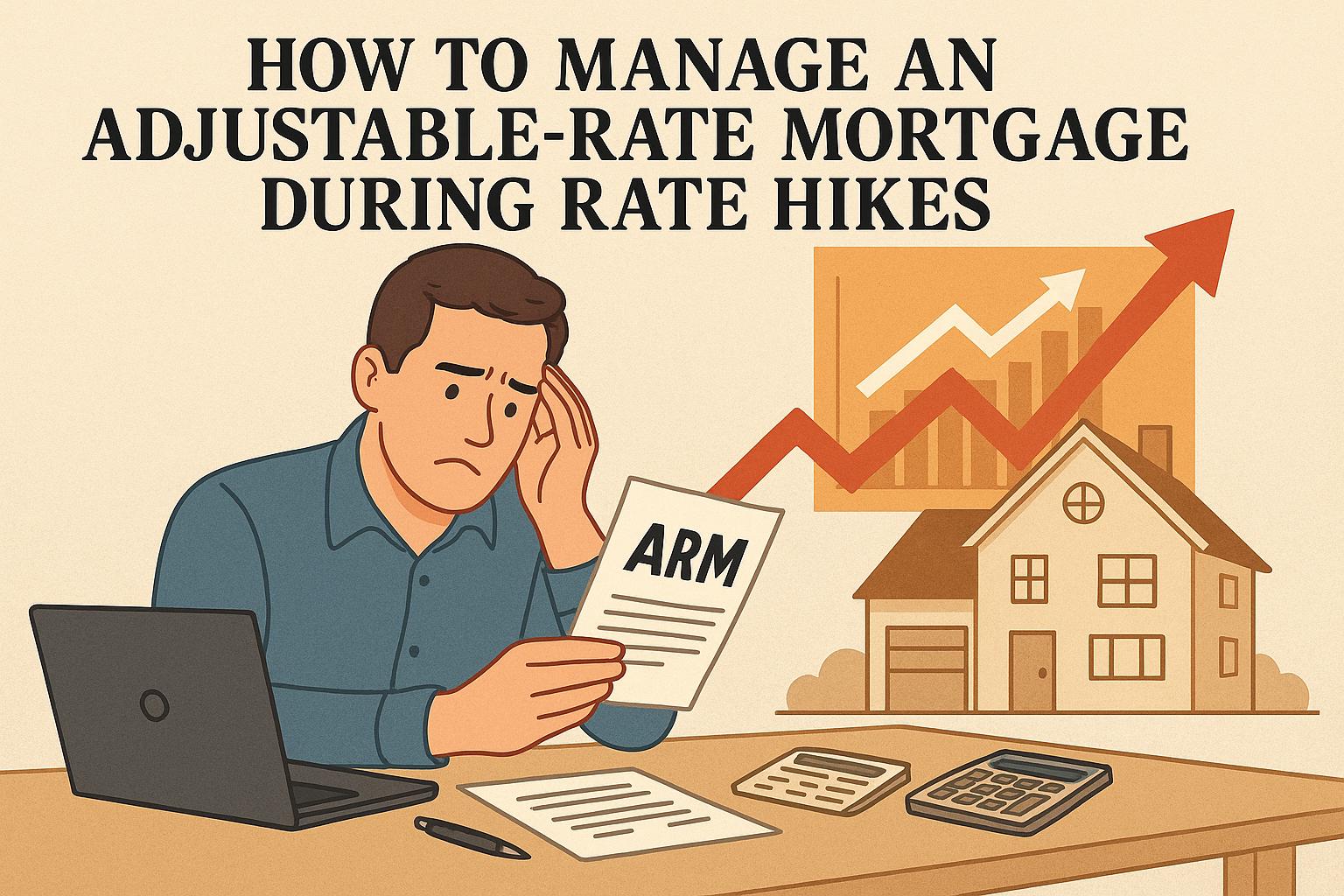
Adjustable-rate mortgages (ARMs) are a type of home loan product characterized by an interest rate that can fluctuate over time. Unlike a fixed-rate mortgage where the interest rate remains constant throughout the loan term, ARMs start with a lower fixed rate for an initial period and then adjust to reflect the prevailing market rates. This can result in varying monthly payments, which can either increase or decrease, depending on current interest rate trends.
During periods of rising interest rates, commonly referred to as rate hikes, borrowers with ARMs could see their monthly mortgage payments increase. This situation necessitates having a well-thought-out strategy to manage mortgage payments as interest rates fluctuate. Understanding the specific terms of your ARM is vital. This includes being aware of the initial fixed-rate period, when and how often rate adjustments occur, and any rate caps that are in place to limit the extent of increases.
Effectively managing an adjustable-rate mortgage during times of rising interest rates involves a multifaceted approach. Borrowers can adopt several strategies to mitigate potential negative impacts:
Take the time to carefully review the details of your ARM. Understanding the initial fixed-rate period is crucial, as it provides a window of stable payments before adjustments begin. Also, become familiar with the adjustment schedule, which indicates when rate changes will occur. Knowing any caps on rate increases is essential, as these limit both the amount a rate can rise during an adjustment and over the loan’s duration.
If interest rate hikes are straining your financial situation, refinancing might be a viable solution. Converting your ARM into a fixed-rate mortgage can lead to more consistent and predictable payments, thereby easing budgetary pressures. Before deciding to refinance, explore your options thoroughly. For further details on the refinancing process, this resource offers valuable guidance.
Given the potential for fluctuating monthly payments, having a robust financial plan is essential. Part of this involves setting up an emergency savings account designated for offsetting unexpected increases in your mortgage payments. Such a reserve can serve as a financial safety net, cushioning against future rate adjustments and helping maintain financial stability.
Making additional payments towards your principal balance whenever feasible is another strategy. This practice can decrease the total interest paid over the life of the loan, and it may also expedite the payoff of your mortgage. However, it’s important to confirm that your loan terms do not include any prepayment penalties, which could negate the benefits of early payments.
During times when mortgage payments increase, it might be necessary to reassess discretionary spending. Identifying areas where non-essential expenses can be reduced can help to reallocate resources toward satisfying housing payment obligations. This proactive approach can ensure that increased mortgage costs do not detrimentally impact your overall financial health.
If managing an adjustable-rate mortgage becomes challenging, consulting with a financial advisor can be an invaluable step. These professionals offer personalized advice tailored to your specific financial context, helping you to devise strategies that align with both current realities and future aspirations. A thorough financial evaluation with an advisor can provide clarity and foster informed decision-making.
Navigating an ARM during periods of interest rate hikes demands a proactive and informed approach. By thoroughly understanding your loan terms and implementing effective financial strategies, you can manage rate adjustments adeptly. Engaging with professional guidance where needed further supports your endeavours to safeguard financial well-being amidst changing economic conditions. Through meticulous planning and considered actions, managing an adjustable-rate mortgage can become a controlled and achievable task.
This article was last updated on: October 4, 2026