
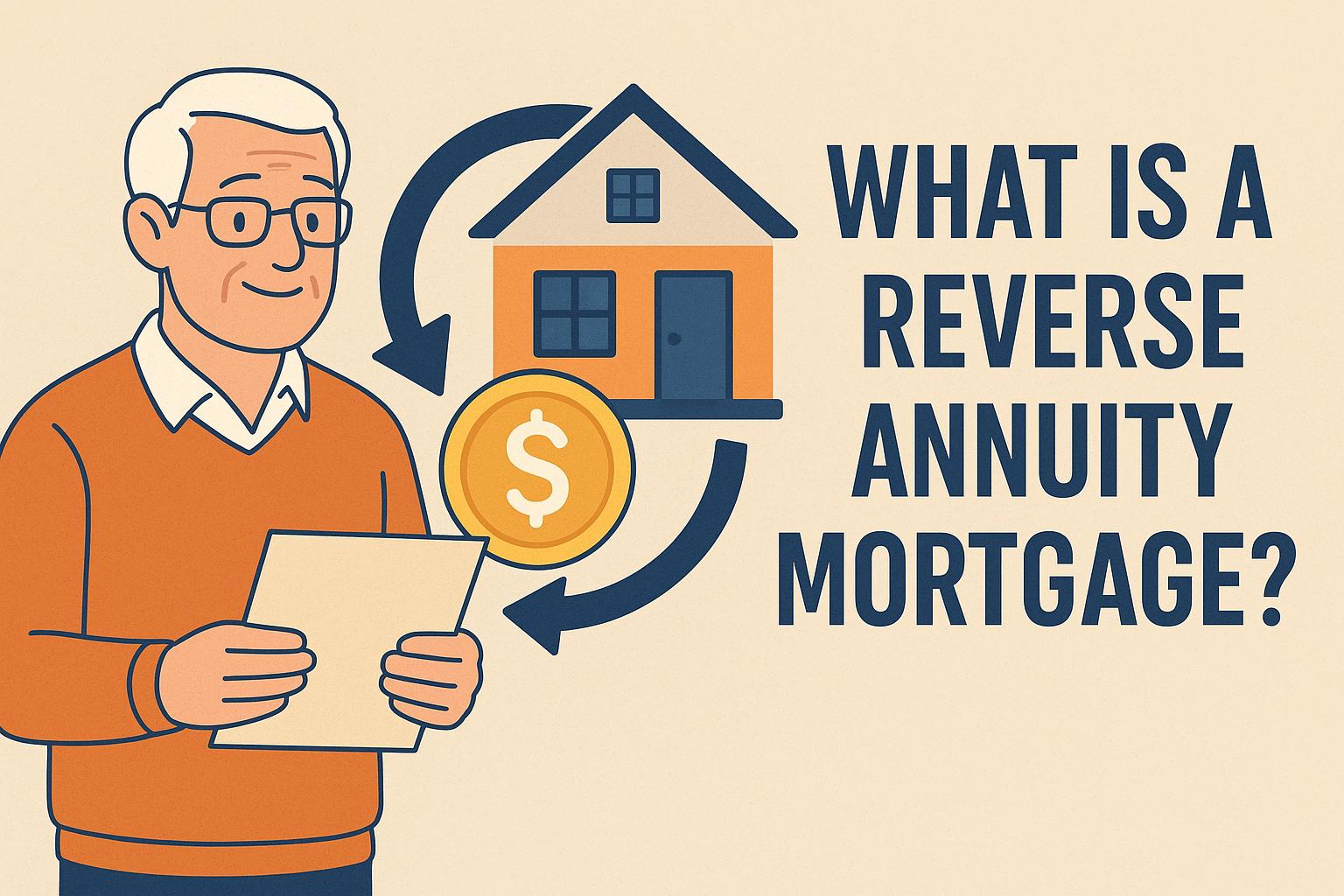
A reverse annuity mortgage (RAM), a unique financial tool, is catered to older homeowners, enabling them to convert a portion of their home equity into a steady income stream. This can be especially useful for retirees who wish to bolster their income while retaining ownership of their homes. By facilitating the access to home equity without an outright sale, a reverse annuity mortgage serves as an alternative for those seeking financial relief or supplementary income in their later years.
In the structure of a reverse annuity mortgage, homeowners leverage their home’s equity by borrowing against it with the lender disbursing funds to them in various possible formats. The disbursement can be modeled as monthly income payments, which provide a steady influx of cash. Alternatively, they might opt for a line of credit, offering more flexibility by allowing them to withdraw funds as needed. For those who require immediate funds for specific purposes, a lump sum payout could be arranged.
This setup reverses the typical flow of money seen in conventional mortgages. Instead of the borrower making monthly payments to clear off the mortgage principal and interest, the lender makes payments to the homeowner. The responsibility of repayment is postponed, allowing the homeowner to enjoy the income generated through the loan without immediate financial pressure. This distinct structure empowers homeowners to address financial needs while remaining in their homes.
There are specific criteria homeowners must meet to qualify for a reverse annuity mortgage, ensuring that it suits their circumstances:
One of the defining features of a reverse annuity mortgage is its repayment terms. Typically, repayment is deferred until significant life events occur. These events could include the homeowner deciding to sell the property, a permanent move to a different residence (such as a nursing home), or the passing away of the homeowner. At these junctures, the loan becomes due in full. Often, repayment is facilitated through the sale of the property, with any remaining proceeds after settling the loan returning to the homeowner or their heirs. This provision ensures that homeowners are not burdened with monthly repayments, allowing for financial flexibility through their retirement years.
While reverse annuity mortgages can offer substantial financial benefits, they also come with associated costs that must be carefully evaluated. First, interest accumulates on the borrowed amount, contributing to the overall cost of the loan. Origination fees, which cover the lender’s costs of processing and approving the loan, are also standard. For government-insured loan products, mortgage insurance premiums may be applicable, safeguarding both the lender and the borrower. Moreover, there are ongoing servicing fees which account for the administration of the loan throughout its term.
These costs can incrementally diminish the homeowner’s retained equity in their home, a crucial consideration for those who wish to preserve a portion of their home’s value for their heirs or future financial security.
Additionally, homeowners must deliberate on the impact a reverse annuity mortgage might have on their heirs. Since the loan becomes due when the borrower passes away or moves permanently, there may be a necessity for heirs to sell the home to settle the outstanding loan balance. Heirs intimating to retain ownership of the property would need alternative means to settle the debt, such as refinancing or using other financial resources.
Grasping the various elements and implications of reverse annuity mortgages is imperative for homeowners contemplating this financial product. It is advantageous to consult with a financial advisor to ascertain whether a RAM fits appropriately within one’s financial plan, taking into account personal finance goals, potential risk factors, and the implications on heirs. Additionally, government websites, financial institutions, and reputable financial counselors provide rich resources and information regarding the mechanics, benefits, and pitfalls associated with reverse annuity mortgages. Engaging with these resources ensures that homeowners are making informed decisions that align with their long-term financial strategies and personal circumstances.
This article was last updated on: June 28, 2026