
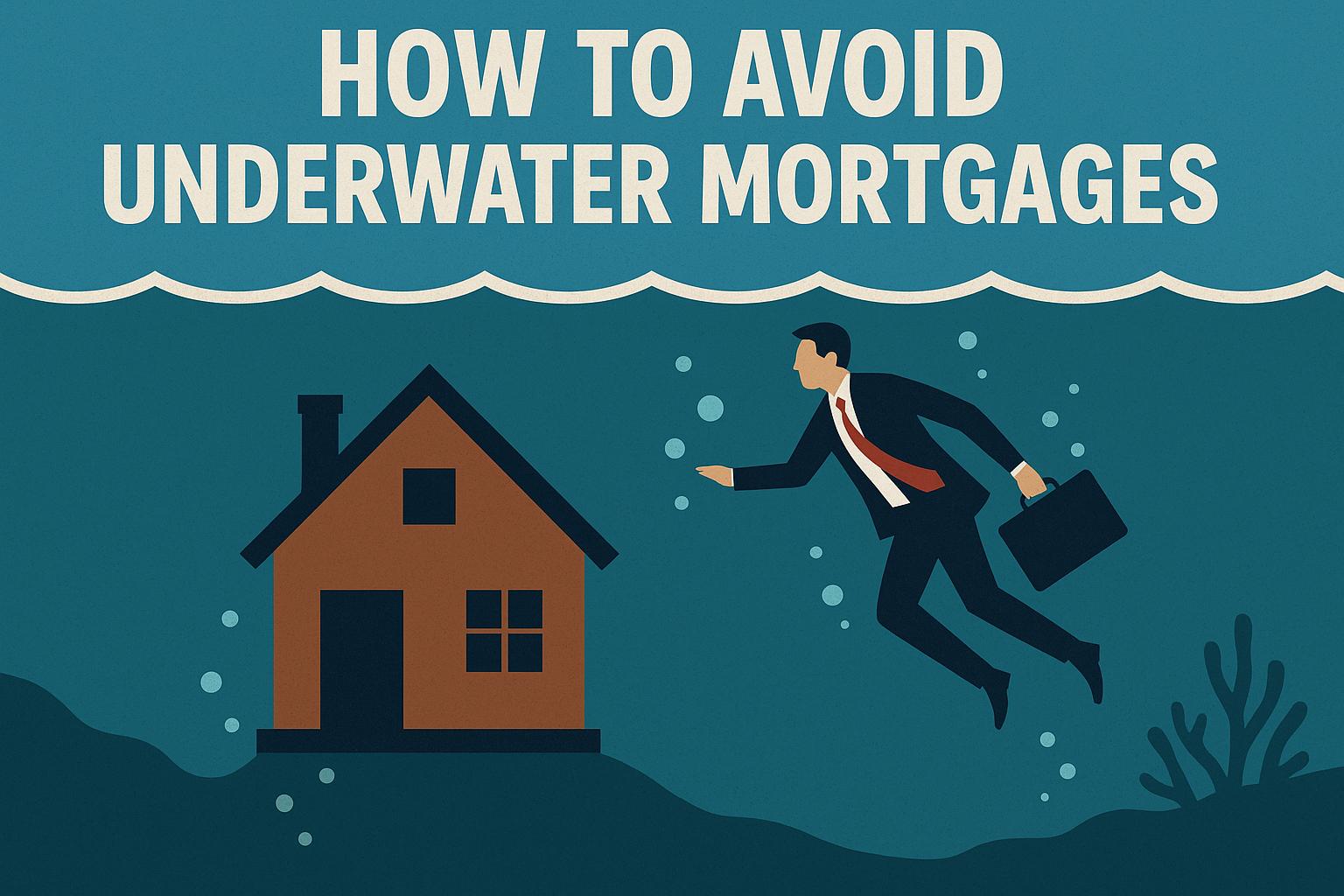
An underwater mortgage, often referred to as an upside-down or negative equity mortgage, is a situation where homeowners owe more on their mortgage than the current market value of their property. This scenario poses significant challenges, primarily by limiting the homeowner’s financial flexibility. Understanding the underlying causes and adopting strategies to prevent facing such a predicament is crucial for both prospective and current homeowners.
Understanding the factors leading to underwater mortgages is essential in preventing them. Below are several primary causes:
Decline in Property Value: The real estate market is subject to fluctuations, and a significant decrease in a home’s market value can push the mortgage underwater. Economic downturns or shifts in local market conditions can spur these decreases, leaving homeowners with mortgage levels surpassing what the property is worth.
High Interest Rates: When loans come with elevated interest rates, the process of building equity is slowed considerably. Higher interest means more of a homeowner’s monthly payments go toward servicing the interest rather than reducing the principal. This situation becomes precarious if property values plummet.
Minimal Down Payment: A small down payment can set the stage for a mortgage to go underwater if property values decline. A minimal down payment means there is less initial equity, increasing vulnerability to market downturns.
Thankfully, there are proactive strategies that potential homeowners can deploy to mitigate the risk of ending up with an underwater mortgage.
One of the most crucial elements in protecting against an underwater mortgage is timing the purchase. Understanding real estate market conditions is key. Buying during a stable or rising market can shield homeowners from sudden drops in property values. Consulting with a seasoned real estate expert is advised to gain insights into the current market dynamics and whether it is conducive for buying a property.
Making a substantial down payment is a strategic move that provides a buffer against market downturns. A larger down payment reduces the principal amount of the loan, thereby establishing a greater equity stake right from the inception of the mortgage. This equity acts as a protective cushion, ensuring that the homeowner is less likely to find themselves underwater even if property values decline.
Selecting a fixed-rate mortgage can be an effective strategy to guard against interest rate volatility. Fixed-rate loans offer predictable monthly payments, which can be invaluable when planning long-term finances. This type of loan prevents unforeseen increases in interest, which might otherwise exacerbate financial burdens and potentially lead to negative equity situations.
Continually staying informed about local real estate market trends is vital. By keeping an eye on these trends, homeowners have the opportunity to act preemptively if warning signs of market declines arise. In such instances, refinancing to a more favorable interest rate or paying down the mortgage principal more aggressively may help maintain positive equity in the home.
Engaging in regular maintenance and making strategic upgrades are necessary actions to help sustain or enhance a property’s value. Investing in necessary repairs or aesthetic improvements can make a home more attractive to potential buyers, which is particularly crucial if selling becomes necessary due to financial constraints.
An underwater mortgage can represent a complex and daunting financial situation. However, by understanding the causes and implementing appropriate preventive measures, homeowners can significantly reduce their risk. Making informed decisions and remaining alert to market conditions enable homeowners to protect their equity and circumvent the troubles associated with negative equity. For more guidance and resources on managing mortgages effectively, visiting expert financial advice websites such as the Consumer Financial Protection Bureau may prove advantageous. These platforms provide valuable insights and resources for homeowners looking to stay ahead of their financial obligations in the ever-shifting real estate landscape.
This article was last updated on: March 15, 2026