
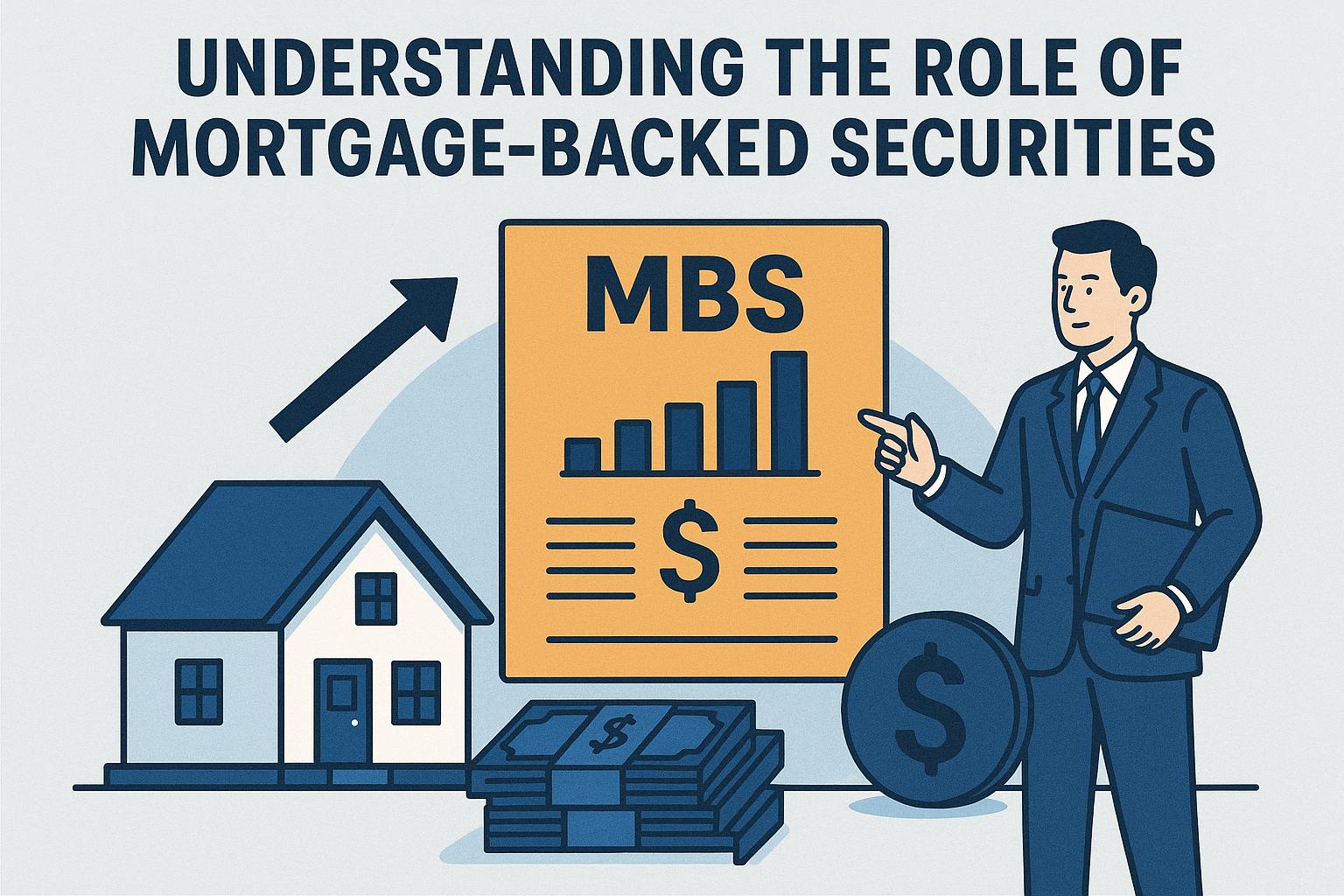
Mortgage-backed securities (MBS) play a pivotal role in contemporary financial markets, significantly impacting the global economic landscape. A deeper comprehension of their function and implications is crucial for anyone with an interest in finance and economics.
Mortgage-backed securities represent a category of investment that is collateralized by a collection of home loans. In essence, these securities allow investors to acquire a stake in the mortgage loans extended to homeowners. The formation of an MBS involves a procedure known as securitization, whereby multiple mortgage loans are aggregated and shares of this pool are issued as securities.
The securitization process is a vital mechanism within financial markets. It involves financial institutions, such as banks, gathering home loans that exhibit similar characteristics, such as maturity periods and interest rates. These loans are then consolidated into a single security, which is subsequently sold to investors in pursuit of a steady income stream. The payments from borrowers on these underlying mortgages are transferred to holders of the MBS, enabling these investors to partake in the mortgage payment cash flows.
Government-sponsored enterprises, notably Fannie Mae and Freddie Mac, are integral to the MBS market. These entities purchase mortgages from lenders, create MBS, and typically offer guarantees to investors regarding the prompt payment of both principal and interest. Such backing from GSEs generally bestows a degree of security and confidence in these securities, rendering them attractive to investors.
MBS contribute to enhancing liquidity and credit availability within the housing market. However, they also encompass specific risks. The financial crisis of 2007-2008 highlighted the volatility and potential drawbacks of mortgage-backed securities, particularly when they incorporate subprime mortgages.
One of the key benefits of MBS is their role in augmenting liquidity within the mortgage market. They facilitate the redistribution of mortgage risk from lenders to a wider pool of investors. This redistribution has the potential to result in an increased availability of funds, which can be utilized to offer new mortgage loans, thereby bolstering the housing sector.
MBS carry inherent risks that investors must understand. Principal among these is default risk; if borrowers fail to meet their mortgage obligations, it adversely affects the investors’ cash flow. Moreover, fluctuations in interest rates can have significant implications for MBS value. Rising interest rates may reduce prepayment speeds, while declining rates might prompt a wave of refinancing, both scenarios posing challenges for returns. Furthermore, if not meticulously structured, MBS incorporating poor-quality loans can lead to substantial financial losses for investors.
Interest rate risk is a critical factor for MBS investors to consider. The value of MBS is inversely related to changes in interest rates. When interest rates rise, the value of existing MBS can fall since newer issues with higher rates become more appealing. Conversely, when interest rates fall, the risk of prepayment increases, as homeowners might opt to refinance their mortgages at lower rates. This situation can lead to MBS investors receiving their principal back sooner than expected, impacting the anticipated returns.
Prepayment risk arises when borrowers pay off their mortgages earlier than estimated, often due to falling interest rates that enable refinancing. This can result in the early return of principal to investors, affecting the yield. On the other hand, extension risk occurs when interest rates rise, reducing prepayment speeds. In this scenario, investors receive their principal back later than anticipated, which can negatively affect returns given the prevailing higher market interest rates.
Mortgage-backed securities constitute a complex yet essential element of the financial system. They offer advantages such as enhanced liquidity and credit availability but also entail intrinsic risks. A comprehensive understanding of these complexities can aid investors in making informed decisions and managing their portfolios more effectively. For those interested in further exploration, several resources are available, including the U.S. Securities and Exchange Commission and business financial publications.
Grasping the finer details of MBS is vital for stakeholders in the financial industry. Whether you’re considering investing in these securities or are simply interested in the broader economic impacts, a thorough analysis of their mechanisms and influences is indispensable. By examining the roles MBS play, the associated risks, and the safeguards involved, individuals can better navigate the complexities of the financial landscape with confidence and acuity.
This article was last updated on: August 25, 2026